
- What is a VPN?
- Features
-
- Download VPN
-
-
Desktop
- Windows VPN
- macOS VPN
- Linux VPN
-
Mobile
- Android VPN
- iOS VPN
-
Browser Extensions
- Chrome Extension
- Firefox Extension
- Edge Extension
-
-
- Pricing
- Support
- VPN News
What Is a Free VPN and Do They Keep You Safe?
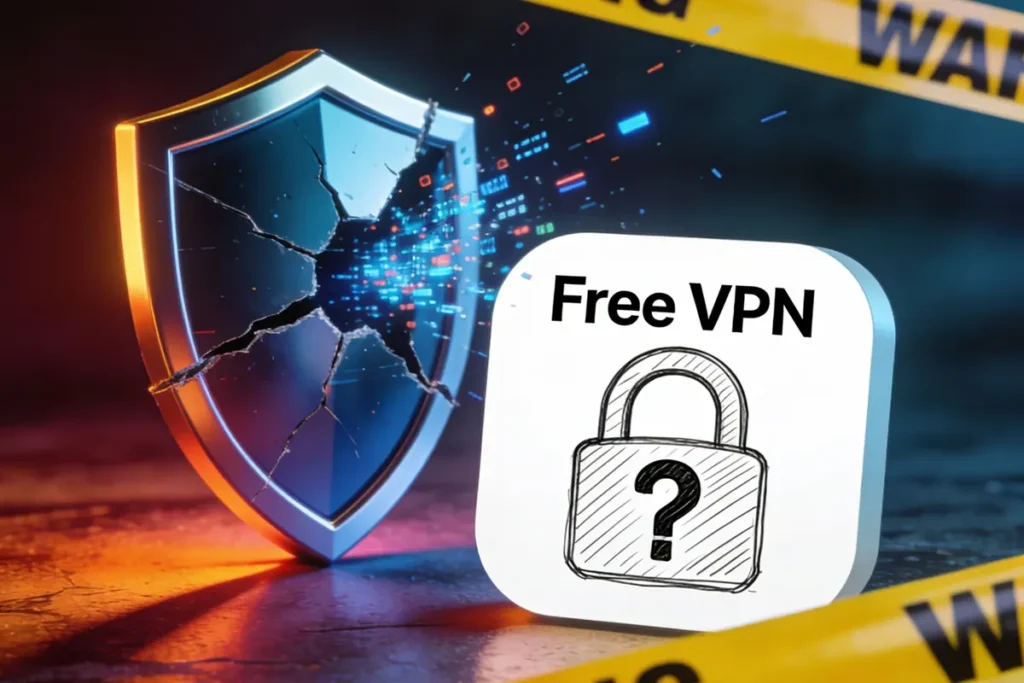
Free VPN services are often presented as a simple solution to growing concerns about online privacy and security. With data breaches, tracking, and public Wi-Fi risks becoming more common, many people turn to free VPN apps expecting protection without cost. What is less obvious is how these services operate, what tradeoffs they involve, and whether they actually deliver meaningful privacy. Understanding how free VPNs work and where their limitations lie is essential for anyone trying to make informed decisions about protecting their data online.
Why This Question Matters Right Now
As concerns about online privacy and security continue to grow, many people searching for protection encounter one tempting option first: free VPNs. These services promise anonymity, encryption, and safety at no cost, often appearing at the top of app stores and search results. At a time when data breaches, tracking, and public Wi-Fi risks are common, it is reasonable to ask whether a free VPN can actually provide meaningful protection.
The answer is more complicated than a simple yes or no. Understanding how free VPNs operate, what tradeoffs they involve, and how they compare to privacy-focused services is essential for anyone trying to make informed decisions about online safety.
What a Free VPN Actually Is
A VPN encrypts internet traffic and routes it through a remote server, helping protect data in transit and reduce exposure to network monitoring. This core technology is the same whether a VPN is paid or free. The difference lies in how the service is funded and what happens to user data as a result.
According to the Electronic Frontier Foundation, running a VPN infrastructure costs money, including servers, bandwidth, security maintenance, and engineering oversight. When users are not paying for a service, the provider must generate revenue elsewhere.
How Free VPNs Make Money
Free VPNs often rely on business models that introduce privacy and security risks. Common approaches include:
Collecting browsing data and selling it to advertisers
Injecting ads into web traffic
Limiting encryption quality or connection speed
Sharing infrastructure with unknown third parties
The Federal Trade Commission has repeatedly warned consumers that services marketed as free may still extract value through data collection or undisclosed practices.
In some documented cases, free VPN apps have been found embedding tracking libraries or redirecting user traffic in ways that undermine privacy rather than protect it.
Security Risks Linked to Free VPNs
Independent research has shown that some free VPNs introduce security vulnerabilities instead of reducing them. Academic studies analyzing popular free VPN apps found instances of weak encryption, insecure network configurations, and even malware bundled within applications.
The Cybersecurity and Infrastructure Security Agency consistently stresses that encryption alone is not enough if the underlying service cannot be trusted or properly maintained.
In practical terms, a poorly designed VPN can expose users to man in the middle attacks, DNS leaks, or traffic interception, especially on public Wi-Fi networks.
Performance Limits and False Confidence
Many free VPNs impose strict data caps, limited server locations, and throttled speeds. While this may seem like a minor inconvenience, it can create a false sense of security. Users may believe their activity is fully protected while unknowingly exceeding limits, losing encryption, or being routed through overloaded servers.
The National Institute of Standards and Technology emphasizes that security tools must be reliable and consistently applied to be effective.
Intermittent protection is often no protection at all.
When Free VPNs Might Be Acceptable
There are limited situations where a free VPN may serve a short term purpose, such as testing basic functionality or accessing a trusted provider’s limited trial offering. However, these should be approached cautiously and with a clear understanding of restrictions.
Well known security researchers and technology publications including Ars Technica and Wired have noted that truly privacy-respecting VPN services require sustainable funding models.
How Paid, Privacy-Focused VPNs Differ
Paid VPN services are funded directly by users, aligning incentives around protection rather than data extraction. Reputable providers invest in infrastructure, modern encryption standards, and transparent data handling policies.
VPN Lightning is designed around these principles, emphasizing clear privacy practices, strong encryption, and consistent performance without relying on advertising or user data monetization. The goal is not secrecy for its own sake, but dependable protection for everyday internet use.
Conclusion: Free Is Rarely Free When It Comes to Privacy
Free VPNs can appear attractive, especially for users new to online privacy tools. However, evidence from regulators, researchers, and cybersecurity agencies shows that many free VPNs introduce risks that undermine their core purpose.
Online privacy and security depend on trust, transparency, and reliability. While no tool offers complete protection, choosing services that prioritize user interests over hidden monetization helps reduce exposure and confusion. VPN Lightning fits into this approach by focusing on education, informed choice, and privacy-first design for modern internet users.
About the Author
J.W. Law is a technology researcher and writer with the VPN Lightning Research Team, specializing in cybersecurity, digital privacy, and consumer internet safety. Their work focuses on translating complex technical and policy topics into clear, practical guidance that helps everyday users better understand how the internet works and how to protect themselves online.
Drawing on research from established organizations, J.W. Law produces evidence-based articles that emphasize accuracy, transparency, and informed decision-making. Their writing is designed to support readers who want reliable, non-sensational information about online security, privacy risks, and modern internet use.
Recent VPN News
Online Privacy Tips for Freelancers and Small Businesses
January 13, 2026
10:49 am
No Comments
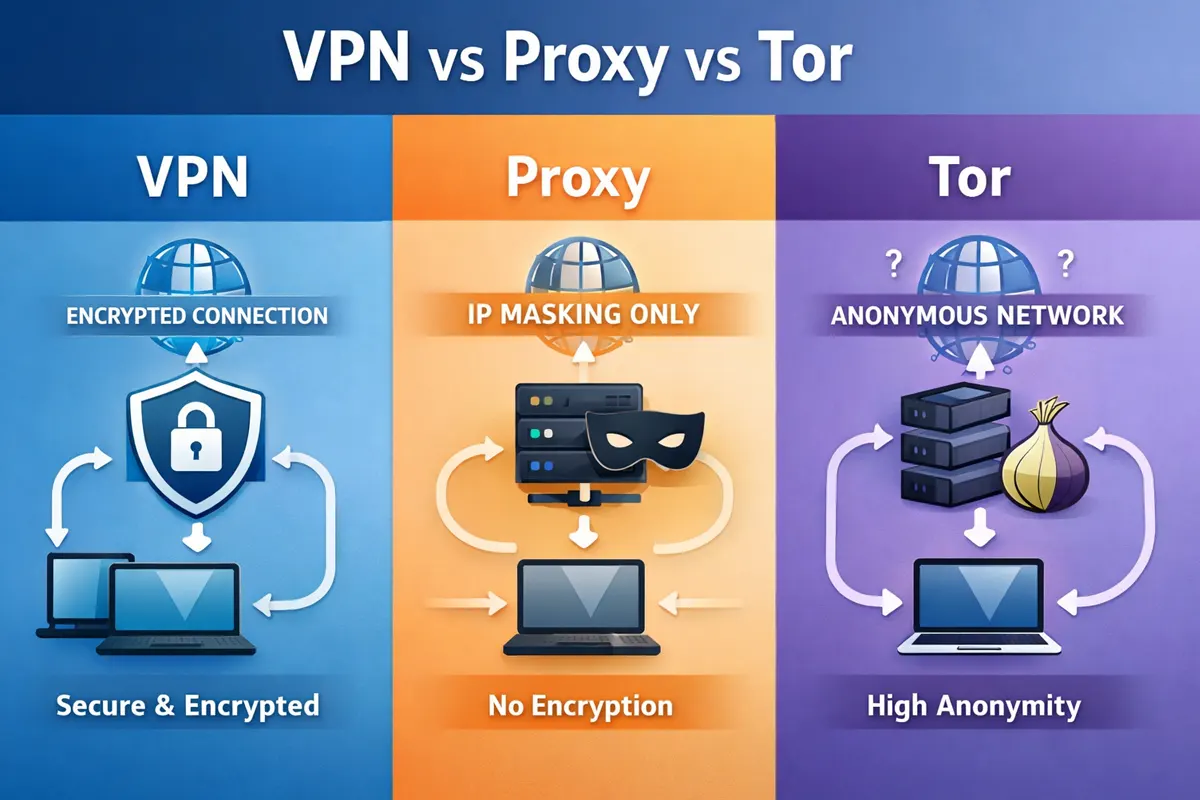
VPN vs Proxy vs Tor Explained: Understanding the Differences
January 5, 2026
12:50 pm
No Comments
Can Your Internet Provider See What You Do Online?
December 28, 2025
4:39 pm
No Comments
ABOUT THE ARTICLE
Frequently Asked Questions
Are free VPNs legal to use?
In most countries, free VPNs are legal, but legality does not guarantee safety or privacy.
Do free VPNs protect my data?
Some free VPNs encrypt traffic, but many offset costs by collecting, storing, or sharing user data, which can undermine privacy protections.
Will a free VPN affect connection speed?
Often, yes. Free services commonly restrict bandwidth or throttle performance because users share limited infrastructure.
Are free VPN applications safe to download?
Not always. Security researchers have identified cases where free VPN apps contained malware or followed unsafe development practices.
Can a free VPN fully replace a paid service?
Usually not. Paid VPNs tend to provide stronger safeguards, clearer privacy commitments, and more reliable performance.
Every Tap. Every Screen. Every Connection. Stay Secure.
VPN Lightning goes beyond standard safeguards. It delivers a unified system for speed, privacy, and digital security. Access lightning-fast routing, select a dedicated IP when necessary, and remain concealed through a strict no-logs commitment. Easy to manage, resilient by design, and created to keep you protected.
- 30-Day Money-Back Guarantee